
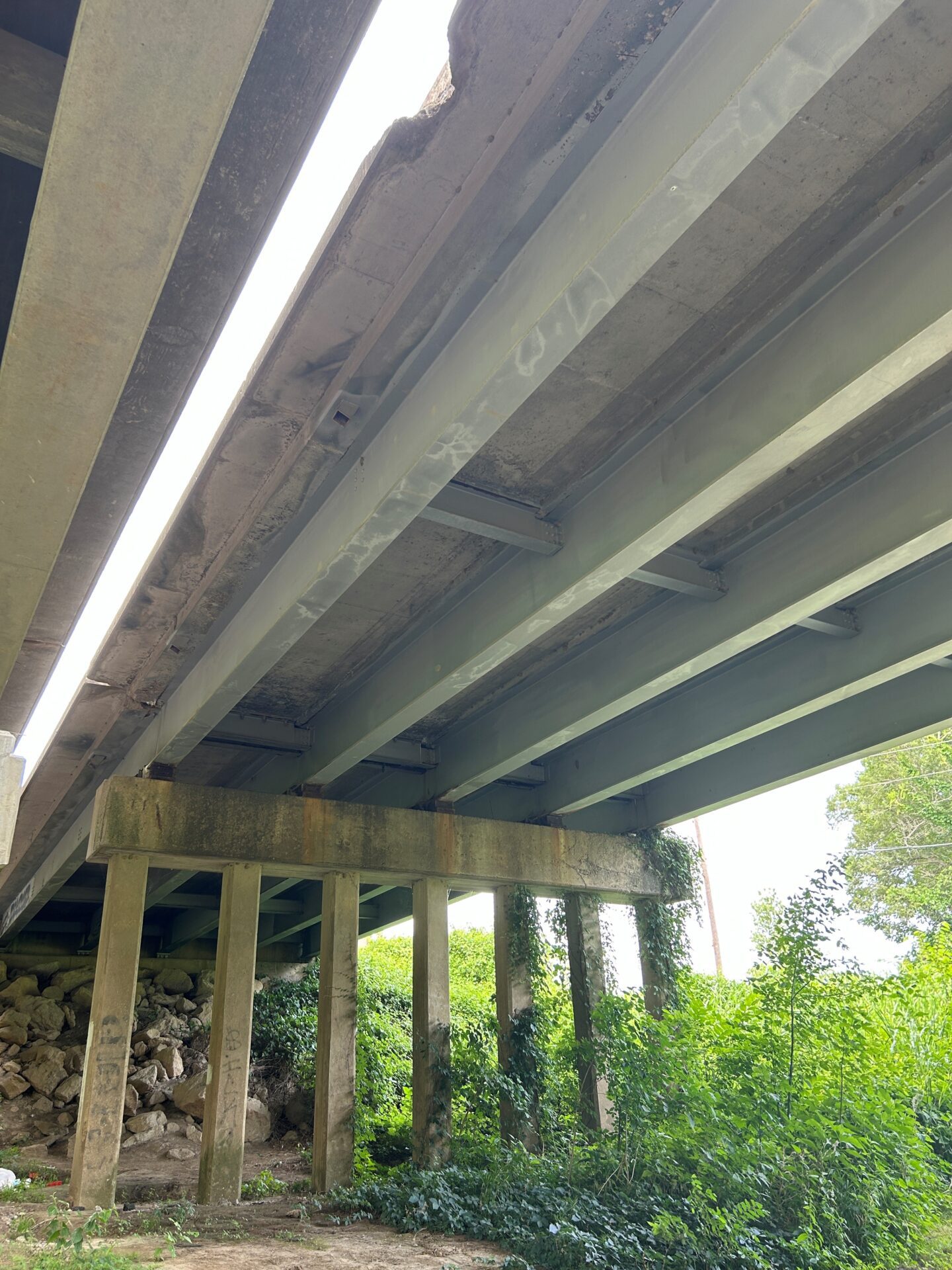
 The Tuxedo Bridge Rehabilitation Project is on-track to move forward this summer, with studies and possible relocation of endangered bats and mussels set for August.
The bridge has been limited to one lane for westbound traffic since January 2023, when a pothole in the inside lane required temporary repair. The bridge was already set to receive a $1.2 million rehabilitation, so repairs were postponed until the rehab project moved forward.
However, in preparation for the project, environmental studies required to obtain a USACE 404 permit, revealed the possible presence of two types of endangered bats and three types of mussels in or under the bridge, requiring the City to conduct specific studies to confirm their presence and formulate a plan for relocation if detected.
The City’s environmental consultant on the project, Stantec, has coordinated the studies with the U.S. Army Corps of Engineers (USACE), U.S. Fish and Wildlife Service (USFWS) and the Oklahoma Department of Wildlife Conservation (ODWC). Stantec has also formulated and submitted plans to relocate any species that are detected.
“The best time to complete the study for the mussels is late summer or early fall, and the bats should not be present after mid-August,” Siemers said. “So we can address the mussel issue first and take care of any relocation that is required utilizing funding through the bridge design contract with Guy Engineering. We can address the bats during the bid for actual construction, hopefully in August, when the bats are most likely to have relocated themselves.”
The design contract is tentatively set for consideration by the council in July. If approved, the mussel study and relocation is set for the first week in August.
“Stantec has scheduled the first week in August for the study and possible relocation activities,” Siemers said. “This will be dependent upon river flow, rainfall and other possible environmental factors. Apparently, this is not overly common in Oklahoma, so the agencies will have people on-site to observe. This will allow us to immediately relocate any species that are detected rather than having to wait until the relocation can be scheduled. This will save money and time for us.”
Siemers said if all goes according to plan, construction on the project could start in early fall.
You might also like: