
Election 2026
BARTLESVILLE ELECTION: FEBRUARY 10, 2026
Three important ballot measures. One decision for our future.
On February 10, Bartlesville voters will decide whether to continue funding the projects and services that keep our city thriving. The 2026 election is designed to address growing infrastructure needs, maintain past investments and enhance quality of life for residents. Voters will decide three measures through five ballot propositions:
✅ Approving a General Obligation (G.O.) Bond Issue (Propositions 1, 2 & 3)
✅ Extending the ½-cent Capital Improvement Projects (CIP) Sales Tax (Proposition 5)
✅ Extending the ¼-cent Economic Development (ED) Sales Tax (Proposition 4)
Passage of the G.O. Bond Issue and 1/2-cent CIP Sales Tax extension will fund $34.5 million in capital needs and projects over the next five years.
Extension of the 1/4-cent ED Sales Tax will continue funding the city’s economic development and tourism efforts.
WHY IT MATTERS
These measures ensure Bartlesville continues to invest in:
- Safe streets
- Strong local economy
- Parks and community spaces
- Tools and facilities to serve residents
Your vote shapes Bartlesville’s future.
Explore resources on this site to learn more about how these investments shape the future of our city and meet our growing needs. Click here to watch a presentation on the upcoming election.
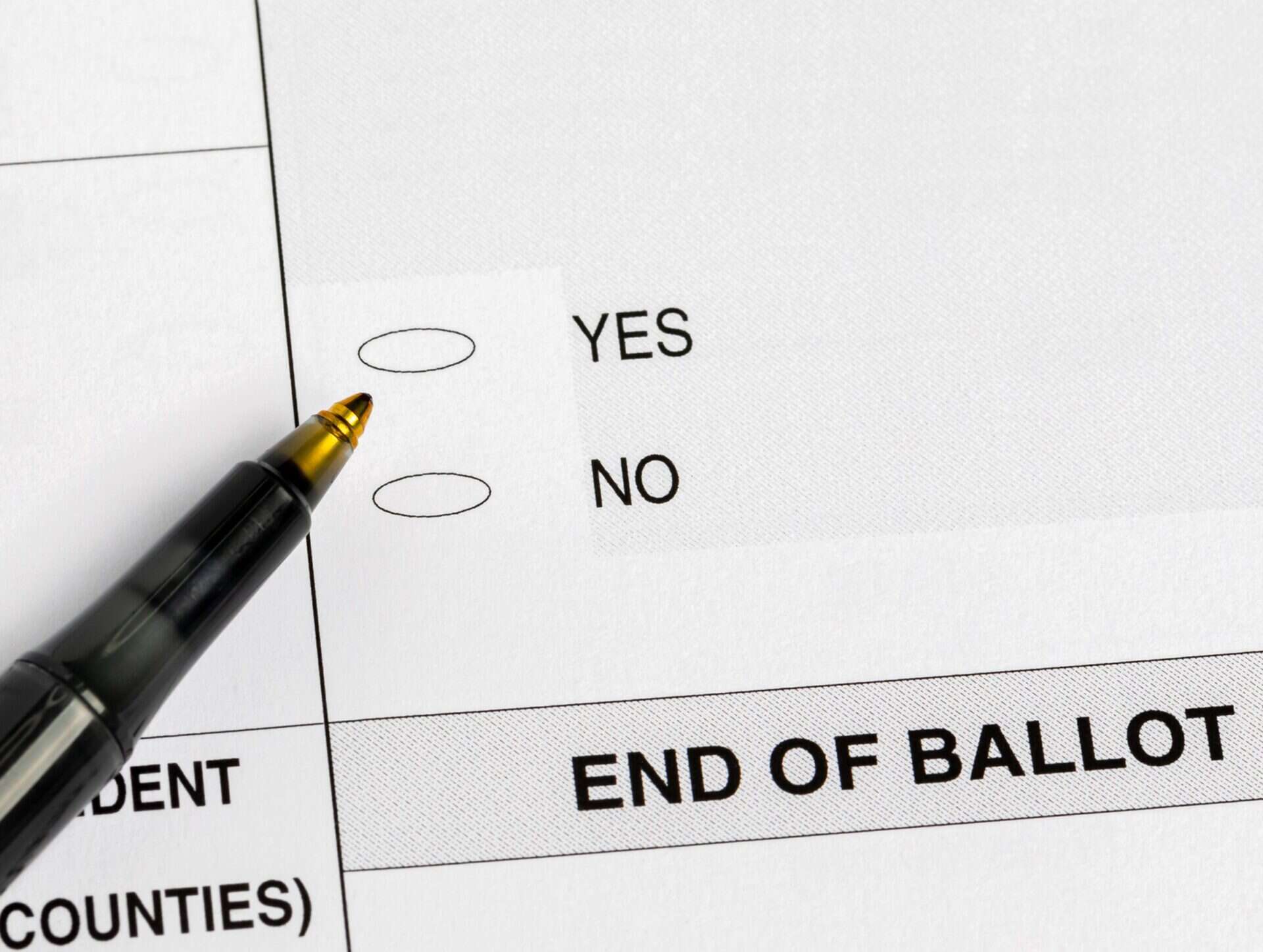
Sample Ballot
Click here to view the sample ballot for the Feb. 10 election.

GENERAL OBLIGATION (G.O.) BONDS
G.O. Bonds are funded through property tax (ad valorem), and capped at 15 mills — meaning there is no tax increase for Bartlesville residents. As existing bonds expire, the City’s levy stays at 15 mills.
If approved, the G.O. Bond issue would fund $17.5 million over the next 5 years or so for:
- Street improvements
- Public safety vehicles & equipment
- Parks and recreation projects
- Facility upgrades
- Technology and tools to better serve residents and visitors
For the full list of G.O. Bond projects, click here.
Bond Transparency Act Notice
Ordinance #3610 and Proclamation Notice regarding GO Bond Election.
½-CENT CAPITAL IMPROVEMENT PROJECTS (CIP) SALES TAX
The 1/2-Cent CIP tax is an existing sales tax that also helps fund street repairs, equipment, facility upgrades and other projects as needed. February’s vote would extend the tax, not increase it. If approved, CIP sales tax revenues are expected to generate approximately $17 million over 5 years for essential city projects. Highlights include:
- Vehicle replacement and equipment
- Storm siren system upgrade
- Preventative street maintenance projects
- Community Center lighting upgrade
- Pathfinder Parkway improvements
For the full list of CIP Sales Tax projects, click here.
Ordinance #3612, Proclamation Notice and Resolution #3758 regarding CIP Sales Tax Extension.
¼-CENT ECONOMIC DEVELOPMENT (ED) SALES TAX
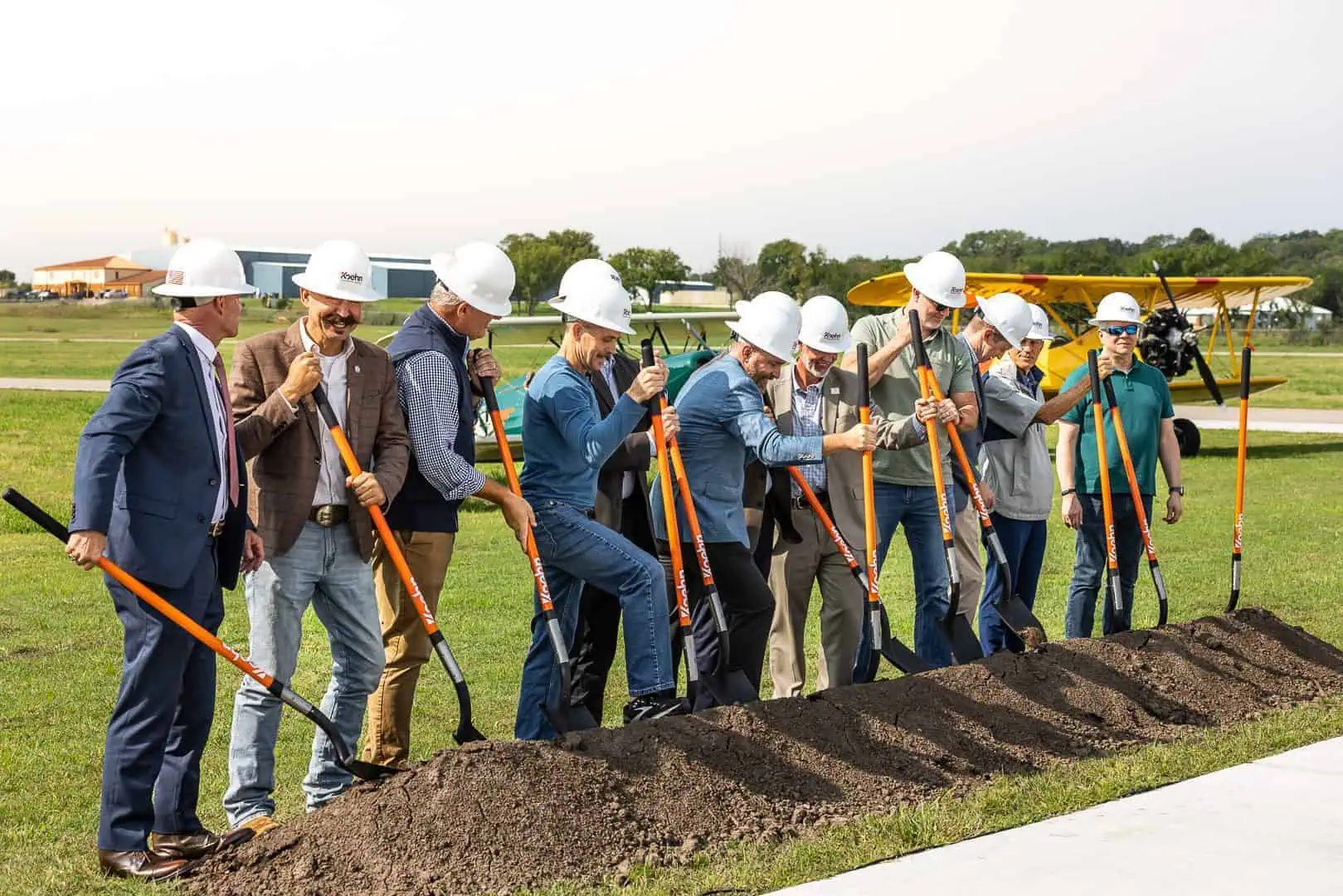
The ¼-cent ED sales tax, first approved in 1986 and renewed every 5 years since, supports Bartlesville’s economic growth and tourism efforts — keeping jobs and sales tax dollars in Bartlesville and attracting new businesses to the area.
Revenue from the ED tax over the years has funded such projects as the Bartlesville Industrial Park, Walmart Distribution Center, the Hilton Garden Inn, Blue Whale, and countless others, as well as helped bring and retain hundreds of jobs to the area with investments in ABB, Springs Global, Husky Portable Containment and Phillips Precision Machining. Retail accomplishments with thanks owed to the voter-approved tax include the Silver Lake Village Shopping Center, Chick-fil-A, Panda Express and the redevelopment of the former Kmart facility.
The 1/4-cent ED tax supports the City’s economic and development partners, Bartlesville Development Authority and Visit Bartlesville.
Click here to watch a presentation on the 1/4-cent ED tax.
Ordinance #3611, Proclamation Notice and Resolution #3757 regarding the ED Tax Extension.
KEY DATES & VOTING DEADLINES
VOTER REGISTRATION DEADLINE
Absentee Ballot Request Deadline
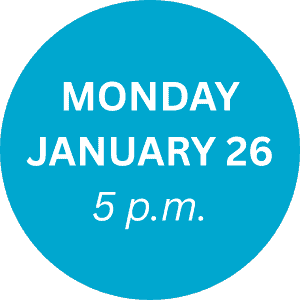
The deadline to request an absentee ballot is 5 p.m. on the third Monday (15 days) before an election. To learn more about absentee voting, visit this page.
Early Voting
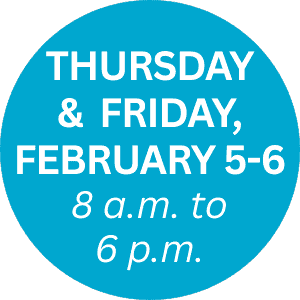
Bartlesville residents can vote early in-person from 8 a.m. to 6 p.m. Thursday, Feb. 5, and Friday, Feb. 6, 2026, at the Washington County Election Board, 401 S. Johnstone (4th floor of City Hall). View a sample ballot here.
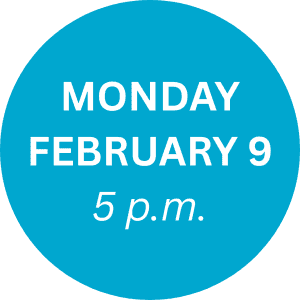
Absentee Ballot Return Deadline (In person)
Ballots delivered in-person must be received by the County Election Board by 5 p.m. on the Monday before election day. Learn more about absentee voting here.
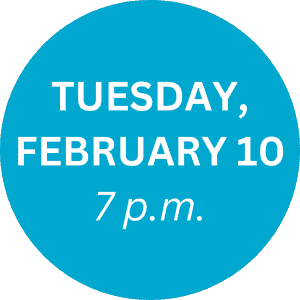
Absentee Ballot Return Deadline (By Mail)
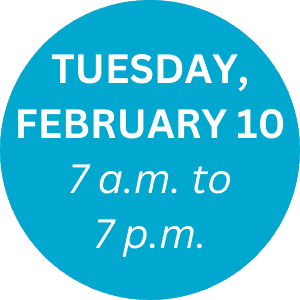
Election Day
Bartlesville residents can vote from 7 a.m. to 7 p.m. Feb. 10, 2026, at their local polling place.
View a sample ballot here.
FREQUENTLY ASKED QUESTIONS
(Click on each blue bar for more information)
When is the election?
The election will be held Feb. 10, 2026. Registered voters who are eligible and who reside within the city limits of Bartlesville will be able to vote in this election. (Please remember to bring identification such as a driver’s license or voter ID card.)
How many propositions are there?
Voters will see five propositions:
Proposition 1: Fire Fighting Apparatus Project
Proposition 2: Street and Bridge Projects
Proposition 3: Parks and Recreational Facilities Projects
Proposition 4: Economic Development Program Sales Tax Extension
Proposition 5: Capital Improvement Program (CIP) Sales Tax Extension
When can I vote?
Early voting is available at the Washington County Election Board, which is located on the fourth floor of City Hall, at 401 S. Johnstone Ave.
Here is the early voting schedule:
- Thursday, Feb. 5, 2026, from 8 a.m. to 6 p.m.
- Friday, Feb. 6, 2026, from 8 a.m. to 6 p.m.
Regular voting is scheduled for Tuesday, Feb. 10, from 7 a.m. to 7 p.m. at your local polling place.
Absentee voting is available. The deadline for requesting an absentee ballot is Jan. 26, 2026, at 5 p.m. Absentee ballots must be received by mail at the county election board on or before 7 p.m. on election day (Tuesday, Feb. 10, 2026). Absentee ballots may also be delivered in person to the county election board on or before 5 p.m. on the Monday before election day.
For more information, please call the Washington County Election Board at 918.337.2850 or go online to the Oklahoma State Election board website. On the Oklahoma State Election board website, you can use the “OK Voter Portal” to confirm your voter registration, view sample ballots, find your polling place, request an absentee ballot, change your address or party affiliation and more.
Will approval of any of this increase my taxes?
No. Approval of these funding mechanisms will not result in an increase in taxes. G.O. bonds are funded through ad valorem, or property taxes, which are paid by Bartlesville property owners. The City’s mill levy would remain at 15 with approval of the bond Issue, which would have no impact on ad valorem taxes. The 1/2-Cent CIP Sales Tax and 1/4-cent Economic Development Sales Tax are both existing taxes. Approval would simply extend both taxes another five years.
How much will this generate/cost?
How are the projects decided?
How much are these projects by category?
G.O. Bonds
Public safety buildings and equipment (Fire Fighting Apparatus) — $1,550,000
(Total projects: $1,550,000)
Streets — $9,745,000
(Total projects: $13,100,000)
Parks & Recreation — $2,125,000
(Total projects: $2,859,000)
Total Projects Cost: $17,500,000
Cost of Issuance (CIO): $500,000
Total Projects with COI: $18 million
Projected Revenue: $18 million
1/2-cent Capital Improvement Project (CIP) Sales Tax
Municipal buildings and equipment — $4,900,000
(Total projects: $7,362,500)
Public Safety buildings and equipment — $3,027,500
(Total projects: $3,812,500)
Streets and Drainage — $5,050,000
(Total projects: $5,175,000)
Parks and recreation — $550,000
(Total projects: $650,000)
Total Projects Cost: $17 million
Projected Revenue: $17 million
What are "70 percent" and "30 percent" projects?
Do the project budgets include projected cost inflation?
Does this fund every infrastructure need in Bartlesville?
Where does the money come from?
Bond programs are funded by property taxes; however, the 2026 bond won’t raise property taxes. The average rate, 15 mills, will remain at the same service level. About 12.4% percent of your property tax goes to the City of Bartlesville, and the rest goes to schools, the county and other government entities. For example, the owner of a $130,000 house pays about $20 monthly for the City’s portion of the property tax. The City uses the money to pay for bonds.
What is a bond program?
During a General Obligation (G.O.) Bond election, voters decide whether to fund major infrastructure projects across the city. G.O. bonds are municipal bonds that allow state and local governments to raise money for projects that may not generate a direct revenue stream – like building and rebuilding streets, bridges, sidewalks and more. This type of bond is one of the City’s most important tools to maintain and expand its infrastructure and relies on property taxes for funding, and Bartlesville’s strong credit rating means it can issue bonds at low interest rates for a sustainable and efficient funding source.
Property taxes finance G.O. bonds, which voters approve for specific capital projects. It is a common misconception that property taxes help pay for the City’s core services. Although this is true in many states, cities and towns in Oklahoma are not allowed to levy property taxes for day-to-day operations.
I voted for a project in a past election that hasn't even started yet. What is the reason for this?
- For G.O. Bond elections, the funding is issued in traunches over the duration of the bond term. Therefore, some projects are funded the first year of the term while others are scheduled for funding in subsequent years.
- For Half-cent CIP Sales Tax elections, projects are funded as tax revenue becomes available over the duration of the CIP term.
- The design phase for most City projects is six months to one year.
- There is not enough City staff to facilitate all of the approved projects at one time.
More information on this is available HERE.
Will any of this money be used to do projects like the Preventative Street Maintenance project that was done last summer?
No. The preventative street project in question involved crack sealing, application of aggregate chip seal, application of HA5 and striping on some of the city’s most heavily-traveled roads. While the process, called a Bonded Matrix Overlay (BMO) or Cape Seal, has been used extensively in other areas of the country, it had not been used locally before last summer.
The purpose of the BMO, and even HA5 on its own, is to extend the life of the roadway, saving taxpayers money in the long-term, not necessarily to improve the ride or appearance of the road surface. While the BMO will do what it was intended to do, neither the public nor City staff were satisfied with the chip seal portion of the process or the appearance of the final result due to the chip seal. We are satisfied with the HA5 used without the chip seal that was applied on Johnstone between Fourth and Fifth streets as a test case for future use on other low speed areas such as residential streets.
The treated roads will last longer at a lower cost than other methods, but due to the above reasons, the City will not do a project using the chip seal like the previous one again.
It is important to note that Preventative Street Maintenance projects extend the life of the road and provide greater cost efficiency for residents. For these reasons, they are a great use of taxpayer funds and are important for keeping our city streets in the best condition possible.
Why aren't new water/sewer lines included in the project list?
Why aren't we using this money to purchase alternative water resources?
City staff is actively working on these efforts, but we are not yet in a position to designate funding for this item. Additionally, the City Council established a Capital Investment Fee many years ago to help fund projects of this nature. Bartlesville utility customers contribute to this fund through a fee included on their monthly utility bills. These revenues are used for necessary infrastructure improvements and to pursue additional water resources.
Why are some projects duplicated in multiple elections?
Additionally, different sections of the same street may appear to be a duplicate, as well as Pathfinder Parkway improvements. None of these are duplicate projects.
When will construction begin and end?
City staff will compile a proposed projects schedule based on the projected bond sales and sales tax revenue over a five-year period. This list will then be reviewed and approved each fiscal year by the City Council. These projects are discussed during meetings that are open to the public and are publicized each year in the City newsletter, City Beat, and on the City website, www.cityofbartlesville.org.
Can the City provide documentation that what they say is true? We need more transparency!
Absolutely! All G.O. Bond, sales tax and project information is contained in the City’s annual budget and audit reports. See www.cityofbartlesville.org for more information. And if you have a specific project in mind, let us know and we’ll track it down for you!
UPCOMING EVENTS
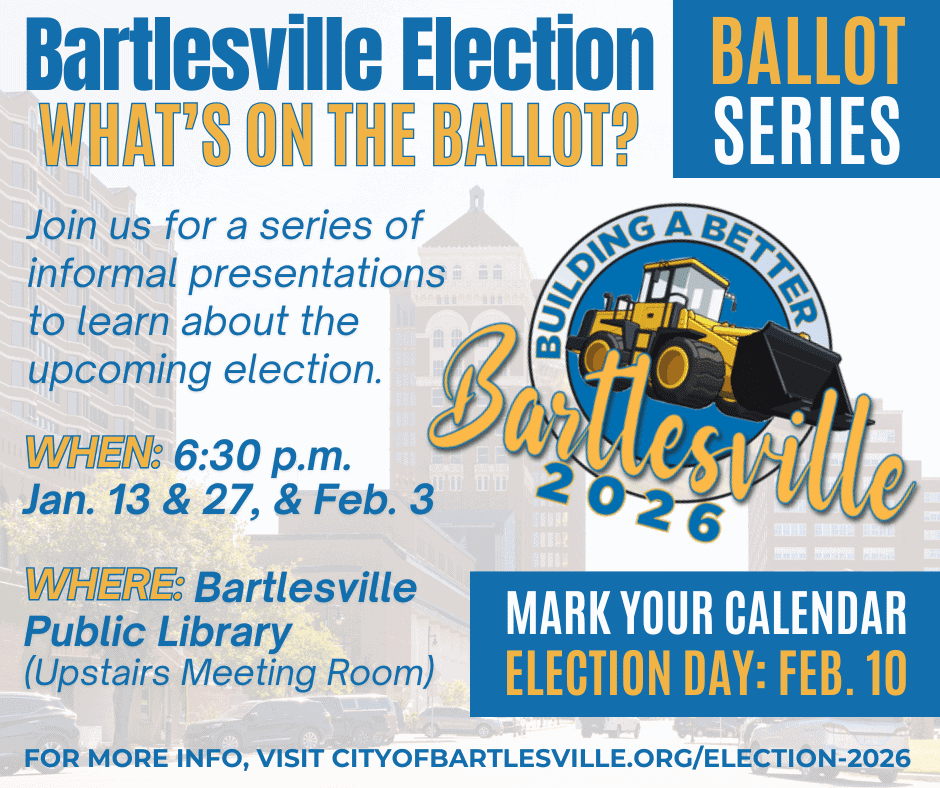
The City will host a series of informal election presentations designed to give voters clear, accessible information and answer questions about the proposals. The meetings are open to everyone, and additional presentations are being scheduled with civic groups, employers and community organizations.
BALLOT SERIES SCHEDULE:
-
6:30 p.m. Tuesday, Jan. 13 @ Bartlesville Public Library (Meeting Room A, 2nd flloor), 600 S. Johnstone Ave.
- 6:30 p.m. Tuesday, Jan. 27 @ Bartlesville Public Library (Meeting Room A, 2nd flloor), 600 S. Johnstone Ave.
- 6:30 p.m. Tuesday, Feb. 3 @ Bartlesville Public Library (Meeting Room A, 2nd flloor), 600 S. Johnstone Ave.
MORE INFORMATION
How to get involved
To stay involved in the upcoming election, Bartlesville residents should:
Register to vote! The most important way you can have your voice heard in the upcoming bond election is by voting. Check your voter registration and ensure you are ready to vote by visiting this page.
Host a meeting in your neighborhood to learn more about the bond projects in your community or you can request a speaker to lead the meeting. Contact us for more information.
Share information about the election. Download a flyer or PowerPoint presentation with election information, or watch a recorded staff presentation here.
Stay-up-to date on election timing and upcoming public meetings by visiting this page or checking the key dates and deadlines above.
Have questions? Contact us.
Watch a recorded staff presentation on the upcoming election by clicking the icon above.
Watch a presentation on the 1/4-cent ED tax by clicking the icon above.