
HOW THE CITY OF BARTLESVILLE IS FUNDED
Most of the City's fundings comes from two main sources: sales tax and utility revenues. Sales tax dollars pay for general City operations, with portions set aside for economic development and capital projects. Utility revenues from water, wastewater and refuse services go directly toward keeping those departments running.
Other funding sources include:
- General Obligation bonds — used for community projects, City equipment and facility upgrades.
- Use tax — essentially sales tax on online purchases, which supports the City's General Fund.
- Hotel-motel tax — helps fund local tourism efforts and community center operations.
- Franchise fees — paid by outside utilities for the right to use City streets and rights of way.
A small amount of funding also comes from state and federal grants, as well as public trusts. For large utility projects, the City may take out special loans, which are repaid through capital fee revenues.
In short, the City’s funding comes from the taxes and fees we all contribute, and those dollars are reinvested into the services and projects that keep Bartlesville running.


SALES TAX
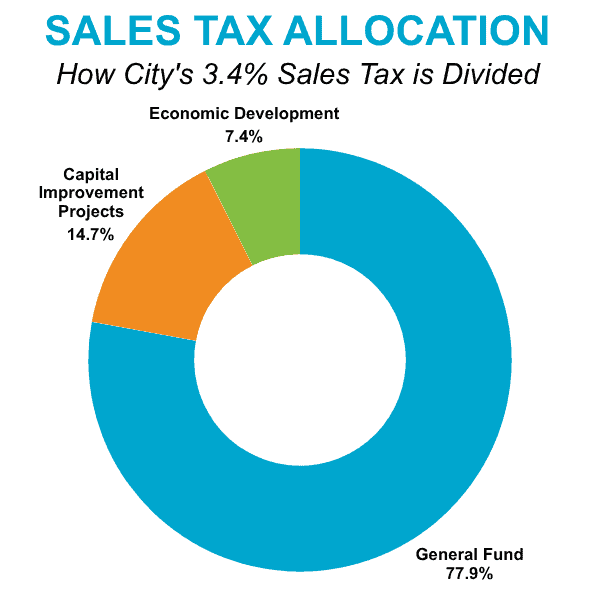
Sales tax is the City of Bartlesville’s largest source of funding. The total sales tax rate in Bartlesville is 8.9 percent. Of that, the State of Oklahoma receives 4.5 percent, Washington County receives 1 percent, and the City receives 3.4 percent. These dollars are collected by the State and then returned to the City each month.
Here’s how the City’s share of the 3.4 percent is divided:
- General Fund (2.65 percent) — This is the backbone of City operations. It funds most departments, including the two largest — police and fire — as well as streets, parks and recreation, engineering, and community development.
- Capital Improvement Projects (1/2-cent CIP tax) — Voters renew this tax every five years. (To date, they have always voted to extend it.) It pays for equipment and projects such as road repairs, vehicles, mowers, and security lighting.
- Economic Development (1/4-cent ED tax) — Supports the Bartlesville Development Authority, which recruits businesses and jobs. The City Council approves the BDA’s budget annually and reviews incentive funding case by case.
Use Tax is essentially sales tax on online purchases from out-of-state sellers like Amazon. These dollars also go into the General Fund to support City operations.
Sales and use tax collections run about six weeks behind, so the monthly revenue the City receives reflects spending from a month and a half earlier. Most sales tax (about 78 percent) and all use tax revenue flow into the General Fund.
Important Note: City operations are not funded by property tax, despite common belief. In Oklahoma, property tax can only be used for debt service or court-ordered judgments. For Bartlesville, that means property tax is limited to General Obligation bonds and a small amount for workers’ compensation claims. Utility services are self-contained, funded by the rates and fees collected from customers. That leaves sales tax — including use tax — as the primary source for everything else the City does.

ENTERPRISE FUNDS
Enterprise Funds are made up of utility revenues and capital fees. In simple terms, when residents pay their utility bills, that money goes directly to support Enterprise Fund departments — water, wastewater, and sanitation/refuse collection. These revenues fully sustain those departments, covering everything from employee salaries to infrastructure, maintenance, and upgrades.
Other Enterprise departments include the City-owned Bartlesville Airport, Boots Hollow Golf Club, and the Sooner and Frontier swimming pools. While these facilities do bring in some revenue, they do not break even. To keep them operating and available to the community, the City supplements their budgets with transfers from the General Fund.


GENERAL OBLIGATION BOND FUNDS
Bartlesville voters are familiar with G.O. bonds because they are asked to approve them every three to five years. The most recent G.O. Bond Election — along with renewal of the Half‑cent CIP Sales Tax — was approved in February 2026. (That tax will expire in 2030 unless voters renew it again.)
G.O. bonds fund major projects and equipment such as streets, fire stations and trucks, computer software, upgrades to City facilities, and parks and recreation improvements. (See examples of previous G.O. bond projects here and here.)
Bond authorizations are typically in the $12–18 million range. The City issues them in several installments over three to five years.
In simple terms, G.O. bonds are government‑issued bonds repaid through property taxes. For Bartlesville, that means the City uses its ad valorem (property) tax to pay back the debt.
"The way these work is we sell them based on our self-imposed millage levy," said Chief Financial Officer/City Clerk/Treasurer Jason Muninger. "The City likes to keep its property tax levy officially at 15 mils, so we only issue in the upcoming year an amount that doesn’t rise above that threshold. As these are sold by the year, their debt service then goes on the tax roll through Washington County. It will then be paid in by all the property owners within the Bartlesville city limits. The beneficiary of the bonds is the residents and visitors of the community. These bond proceeds are for roads, parks, and City-owned buildings and infrastructure."
HOTEL-MOTEL TAX
This revenue comes from hotel and motel stays in Bartlesville. While the dollars are deposited into the General Fund, a portion is earmarked to support Visit Bartlesville, the City’s tourism program, and The Center, based on these revenues. In short, visitors help fund local tourism and community programming.
FRANCHISE FEES
Franchise fees are paid to the City by local utilities that have franchise agreements. These agreements allow companies — such as electric, gas, cable, and fiber‑optic internet providers — to use City rights of way to serve homes and businesses. The fees go into the General Fund to support general City operations.
SPECIAL LOANS
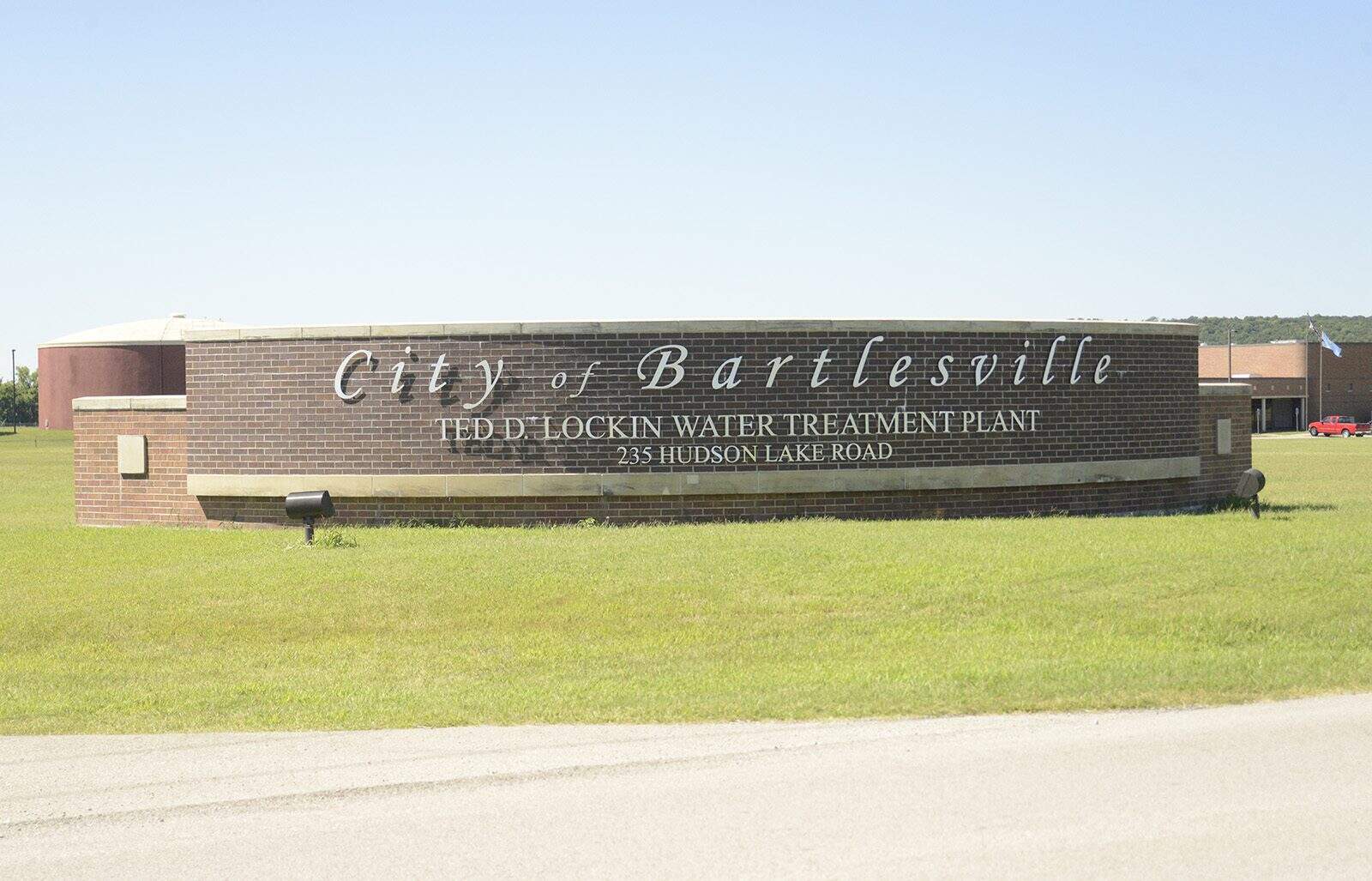
From time to time, the City uses low‑interest loans from entities like the Oklahoma Water Resources Board to finance major utility projects. Past examples include construction of the Ted D. Lockin Water Treatment Plant. An upcoming example is the planned expansion of the Chickasaw Wastewater Treatment Plant. These loans are repaid with revenue from Capital Fees, which are included on monthly utility bills.
OTHER FUNDING
The City also receives some state and federal grants, along with public trust dollars for specific uses. However, these amounts are minimal compared to the City’s overall finances.
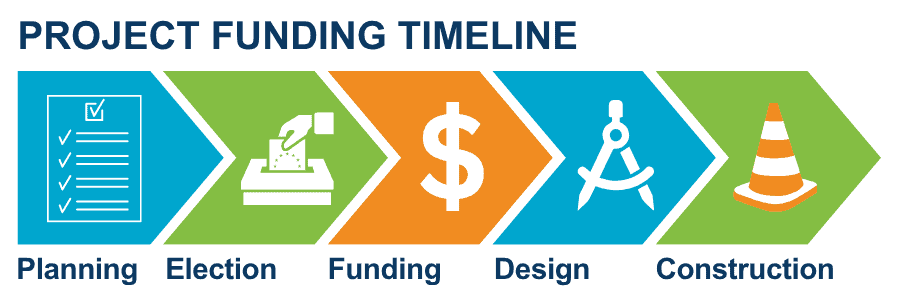
PROJECT FUNDING: ELECTION TO COMPLETION
Residents often wonder why it takes time to complete projects after they’ve been approved by voters. The truth is that moving from planning to completion is a lengthy process with many steps.
Planning actually begins about a year before the election. City staff identifies projects and equipment to recommend for the ballot, based on department needs, input from the City Council, citizens, local groups, and volunteer boards. For G.O. bond elections, staff also recommends a dollar amount and bond duration. For half‑cent sales tax extensions, the total cost is kept below the revenue expected over the five‑year tax period.
The City Council sets the election date during a public meeting. Staff recommendations are discussed in workshops (open to the public), then finalized in a regular Council meeting where projects and the election are officially approved.
If voters pass the measure, staff prepares a schedule for funding over the bond or sales tax term. Funding is issued in stages — called “issuances” — over several years. Each issuance covers a group of projects. Sometimes projects are rescheduled for efficiency or cost savings, but the overall funding amounts remain the same.
It’s important to note that funding availability doesn’t mean immediate construction. Many projects require a design phase that can take six months to a year. In addition, City staff capacity is limited — engineering, finance, and public works teams cannot complete all approved projects at once. As a result, projects are staggered over time.
Summary
- G.O. Bond elections: Funding is issued in stages over the bond term, so projects are spread across several years.
- Half‑cent CIP Sales Tax elections: Projects are funded as tax revenue becomes available over the five‑year term.
- Design phase: Most projects require six months to a year before construction can begin.
- Staff capacity: Limited resources mean projects must be scheduled and completed gradually.
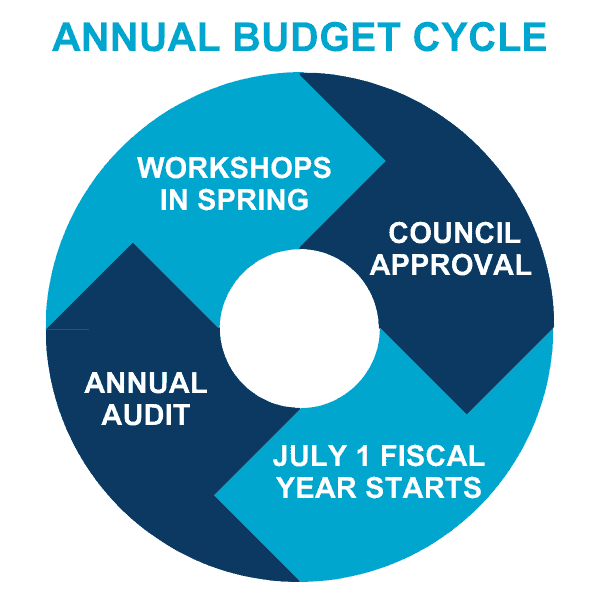
BUDGETS & AUDITS
By law, the City of Bartlesville must pass a budget every fiscal year, which runs from July 1 through June 30. Budgets are prepared by City staff and first presented to the City Council during a workshop meeting, usually in March or April. These workshops give Councilors a chance to ask questions and raise concerns, but no official action is taken. The final budget is then presented during a regular Council meeting (usually in May or June) and must be approved before July 1.
Each year, the City’s finances are also audited by an independent third‑party vendor. City staff prepares the necessary documentation, and the audit findings are presented to the Council during a public meeting. This process ensures accountability and transparency in how public funds are managed.
In addition to the City’s own budget, the Council also approves the budgets of the Bartlesville Development Authority and Visit Bartlesville. The BDA is funded through the Quarter-cent Economic Development tax. Visit Bartlesville, leads the City’s tourism efforts, is funded primarily through the hotel-motel tax.
To view City budgets and audits 2006 through the present, see Financial Document Archives.
MORE INFORMATION
To view information about the passage of the current year's budget, see Council OKs operating, capital projects budgets.
To view the current year's budget, see 2026-27 Budget.
To view a schedule for capital projects approved by voters, see 2026 CIP Project List.
To view the annual report for the current fiscal year, see 2026-27 Annual Report.